 |
 |
 |
 |
 |
|
 |
|
 |
|
 |
|
 |
|
 |
|
 |
 |
Exploring the Dynamics of CRM with QuotingIn the ever-evolving landscape of business technology, Customer Relationship Management (CRM) systems have emerged as indispensable tools, enabling companies to streamline their interactions with customers, enhance service delivery, and ultimately drive sales growth. Among the myriad features that modern CRMs offer, quoting stands out as a critical component, pivotal in bridging the gap between lead generation and closing a sale. This article delves into the nuances of CRM with quoting, addressing common concerns while offering insights into how this feature can be leveraged to optimize business operations. One might wonder, why integrate quoting into CRM? The answer lies in the seamless transition it facilitates from the initial customer interaction to the final transaction. By incorporating quoting capabilities, businesses can generate accurate, professional, and customized quotes quickly, a necessity in today’s fast-paced market environment. Speed and accuracy in providing quotes can significantly influence a customer’s decision-making process, often tipping the scales in favor of a company that can deliver promptly. Critics often voice concerns regarding the complexity and cost of implementing a comprehensive CRM system with quoting features. However, when evaluating these systems, it is crucial to consider the long-term benefits they offer. The efficiency gains from automating the quoting process, reducing manual errors, and ensuring consistency in pricing cannot be overstated. Moreover, many CRM platforms offer scalable solutions that grow with your business, making initial investments more palatable.
Additionally, the ability to analyze quote data through CRM analytics provides invaluable insights into customer behavior and pricing strategies. This data-driven approach allows businesses to refine their pricing models, identify trends, and enhance their overall sales strategy. Furthermore, the integration of quoting within CRM systems enhances collaboration across departments, from sales to finance, ensuring that all stakeholders have access to the same, up-to-date information. In conclusion, while the decision to implement a CRM with quoting features may seem daunting, the advantages it offers in terms of efficiency, accuracy, and strategic insight are undeniable. As businesses continue to navigate the complexities of the digital age, those that embrace these technologies will undoubtedly find themselves better positioned to meet customer expectations and achieve sustained growth. Therefore, while caution and thorough evaluation are advised when selecting a CRM, the potential for transformative impact should not be underestimated. https://keap.com/solutions/quotes
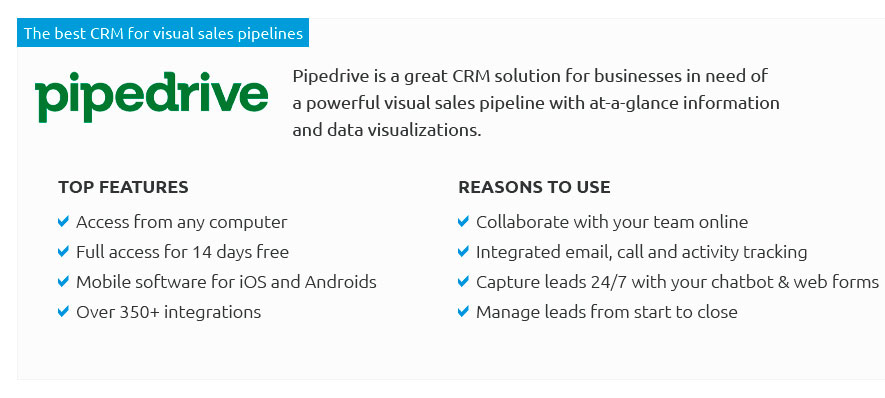
Estimates, proposals, quotes. Whatever you call it, our CRM with quoting software has you covered. Create a proposal template with your logo and standard ... https://www.pipedrive.com/en/products/what-is-crm/quote-crm
Pipedrive's AI-powered features can help you quickly draft personalized and professional quotes and follow-up emails, track opens and get check-in reminders. https://jetpack.com/resources/crm-with-quoting-and-invoicing/
This guide will shed light on the best CRMs equipped with quoting and invoicing functionality, including a detailed look at Jetpack CRM, a versatile solution ...
|
